
On the morning of Vinayaka Chaturthi, homes were filled with joy, flowers and pooja of Vigneshwar. I got news that stopped me cold. Yellanna had attained sadgati and is no more.
Most people live quietly and leave without much of a ripple. But once in a long while you meet someone whose life is so full of purpose, and whose heart is so tied to the earth under his feet, that losing him feels like losing a part of your own world. Sama Yella Reddy was that person for me. He is neither my childhood friend or a colleague. Our friendship began about eleven years ago. I was running a monthly gathering for IT executives in Hyderabad, and a few of us wanted to bring conversations about the land into our air-conditioned rooms. We were looking for someone who could speak about natural farming from lived experience, not from a textbook. A mutual friend brought Yellanna.


When he stood in front of those CXOs, he did not use jargon or slides. He had spent years in Spain, Dubai, and the US working as an SAP consultant, so he knew the corporate world well. Many of us dream of leaving India for that life. Many go, settle down, and never come back. Yellanna did the opposite. He had already built the comfortable life abroad, with the dollar income and the security that comes with it, and he chose to walk away from it and return to his roots in Bharat. And he did not just return for a season. He stayed, and he made it work.


When he spoke that evening about the soil, about the pain of Indian farming, and about how he was trying to work in a broken system, there was nothing put-on about him. He spoke like a man who had chosen the mud on purpose. That evening, a handshake turned into a brotherhood.
To me, I see so many men driving autos and cabs in Hyderabad are sons of farmers. They left their own land because farming could not feed their families. Yellanna wanted to reverse that story. He wanted to prove that a farmer could build a real, sustainable livelihood in India and not be forced to send his children away to the city. That was the mission he came home for.
Not long after, I took a small group of CXOs to his farm near Siddipet. He was always inviting people. Anyone curious, anyone willing to learn, anyone who simply wanted to see what natural farming really looked like. His five-layer farm was never a closed place. It was an open classroom. We stayed the whole night, listening to his challenges, interesting stories, and the quiet breathing of his desi cows. Sitting there in the dark, I asked him if he ever missed the comfort and predictability of life abroad.
He gave me that calm smile of his, showed me the soil and the dairy (cows, hens, geese, and said, “Harish, out there we spent our days fixing software bugs that belonged to someone else. Out here, when I wake up, I get to watch life heal itself. I have never slept better.” His love for traditional agriculture was not a hobby or a phase. It was in his bones. He believed the old ways held wisdom that our modern methods had forgotten, and he spent his years proving it right on his own land.
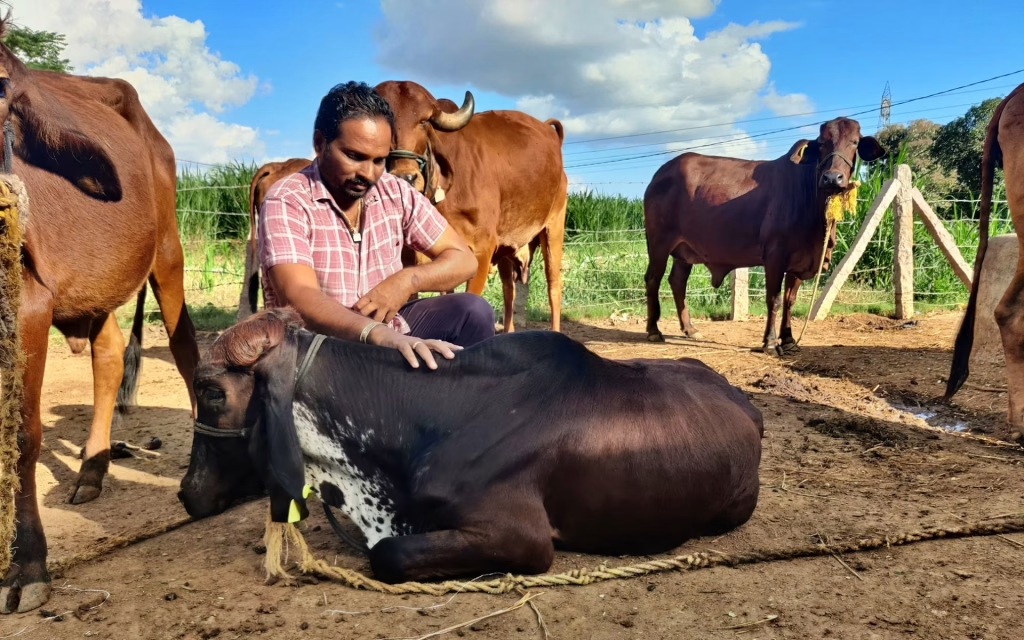
One story he told me stayed with me.
A borewell on the farm had gone completely dry. In most places that is the end of the matter. You dig a new one or you give up. But someone suggested that sounded almost unbelievable. She told him to graze desi cows around that dry bore. Yellanna trusted and did it. In the month of February, in the dry heat, that bore came back to life and started pouring water again. He would tell that story with wonder in his eyes, not as proof that he was clever, but as proof that nature knows how to heal itself if we only work with it instead of against it.
The next morning, we visited his store, Aahara Yoga. That was who Yellanna was. Most farmers in India are crushed by market middlemen, but Yellanna did not complain or wait to be rescued. He built his own model. With his wife running operations beside him, they created a direct link from the soil to the families who needed real food.

He was also endlessly inventive about how to protect the farmer. One of his ideas has stayed with me. At the time of sowing, he would market the rice in advance in his network and I was one of the buyer, at a price lower (BTW organic prices are always hig). It sounds liked he lost out, but it is the opposite. He got money in his hand at the very moment he needed it most, when the crop is still in the ground and the worry is greatest. The burden lifts. He no longer has to gamble on what the market will do at harvest, and he no longer has to beg a middleman for a fair deal.
And the store was never just a shop. Aahara Yoga sold cold pressed oils and real, honest food, but it was more than that. Acupuncture specialists would come there. People came not only to buy but to learn how to live well. It became a small center for healthy living, a place where the idea of good food and a good life were treated as one and the same thing.
When Subhash Palekar introduced him to natural farming, Yellanna went all in. He set up his five-layer model, brought the soil back to life, raised indigenous cows, and showed small farmers that their work could carry dignity. And he did not keep the knowledge to himself. Over the years he trained several thousand people in natural farming. Farmers, yes, but also a great many people from the IT world, people like me who spend our days in front of screens and had almost forgotten where our food comes from. He opened that door for all of us. Government ministers gave him awards, but none of that praise went to his head. His feet stayed bare on his land.


Source of photo: https://www.travellersuniversity.org/post/ahaara-yoga-bringing-harmony-between-healthy-growing-and-consuming
Over the years we fell into a rhythm. I’m volunteering with Seva Bharathi, and Yellanna gave himself to Grama Bharathi, working for rural families. When he and his team were organizing the Kisan Expo, our calls easily ran. We argued, we planned, and we shared dreams about how rural India could stand on its own.
For eleven years, his number was on my speed dial. Whenever my ride took me past Siddipet toward my hometown, my hand would reach for the phone on its own.
“Where are you, Yellanna?” I would ask.
“Right where I belong, Harish” his voice would come back, along with the rustle of store or the sound of cattle.
Those quick calls always turned into long conversations. He had a rare quality. No matter how heavy the problem was, he was always smiling. He wanted, deeply, to do something good for the soil of Telangana before his time ran out.
And now he is gone.
The heaviest weight of this loss falls on his family, who shared his life and his mission every single day. It falls on the farming community, who lost a man who fought for them without asking for anything in return. And it falls on people like me, the ones he welcomed, taught, and changed. I am only one of thousands who feel this same emptiness tonight.

There is something worth pausing on in his very surname. Sama is a name that Telangana knows well. Years ago, Sama Jagan Mohan Reddy, a young student leader at Kakatiya University, stood up to defend the national flag when others tried to tear it down. He refused to be frightened into silence, stood firm as the chief witness against them, and paid for that courage with his life when he was assassinated in 1982 by the naxallites. And here was Sama Yellanna, carrying the same surname, wanting with all his heart to do something for this same land. Different times, different battles, but the same devotion running through the surname. One gave his life defending the honour of the nation. The other gave his years to healing its soil, seed by seed, farmer by farmer. It feels right that both should be remembered together.
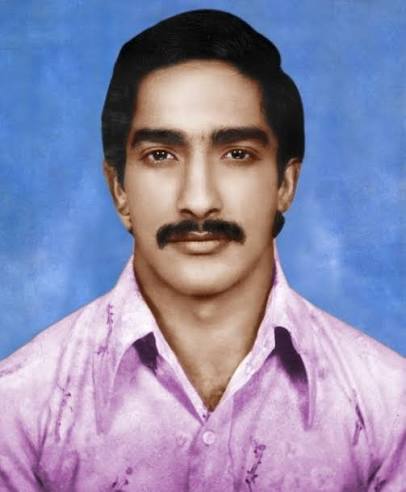

Driving past Siddipet will never feel the same. My thumb will still want to dial his number on the highway, and the silence on the other end will hurt for a long time.
You have not left us, Yellanna. You live on in every seed you planted with love, in every farmer you taught to stand tall, and in the hearts of everyone lucky enough to call you a brother. Rest well, my dear friend.


Leave a Reply